Welcome To My Blog. I respect and appreciate comments, questions, information and theories you might have. Even if i agree with you or not, i won't delete your comments as long as they are not purposefully attacking anyone. I will not condone bullying of any kind. If you that is your intent, don't bother posting because i will delete it the moment i see it.
Showing posts with label Abraham Lincoln. Show all posts

Wednesday, December 31, 2025

CHAPTER TWO: The Education of Mary Todd

CHAPTER TWO

The Education of Mary Todd

Morning did not enter the Todd house so much as haunt it.

It seeped through the shutters in thin, spectral ribbons, pale as breath on a tombstone, brushing the floorboards with a hesitant, trembling hand. It found Mary already awake, sitting upright in her narrow bed, her small frame rigid with the discipline the house demanded. Here, warmth was conditional. Here, silence was survival.


Below her room, she heard the muted clatter of the kitchen — the soft, steady movements of the enslaved women who rose long before the family, tending fires and preparing the day in silence. Their footsteps were the first sounds the house ever made, yet no one spoke their names at breakfast. The house depended on them, but pretended not to.


Sometimes, in that half-light, she imagined she could still smell her mother’s lavender soap — faint, impossible, a memory clinging to the air like a ghost that refused to leave. But when she blinked, the scent was gone, swallowed by the cold.


At nine, she stepped into Reverend Ward’s schoolroom — a long, narrow chamber smelling of chalk, damp wool, and the faint iron tang of winter. The tall windows trembled beneath the wind, their panes quivering like fragile bones. Mary sat straight-backed, eyes bright, listening the way some children pray — with hunger, with reverence, with a yearning so sharp it felt like a wound.


Words became her refuge.

French curled on her tongue like a spell whispered after dark.

Stories opened doors no one else could see.


But each afternoon, she returned to a house that grew colder as it grew grander.


When her father purchased the new home in 1832, the family called it an improvement. More rooms. More space. More children. Yet Mary felt the distance immediately — the echoing halls, the polished quiet, the way her stepmother’s presence filled every doorway like a draft that refused to warm. The house was handsome, but it had no heart. Or if it did, it beat somewhere far from Mary.


Sometimes, passing the parlor, she caught her reflection in the tall mirror — a small girl with solemn eyes, framed by a room too large for her. For a heartbeat, she imagined her mother standing behind her, a soft hand on her shoulder. But the mirror showed only Mary, alone in the vastness.


She learned to move like a shadow.

To observe.

To vanish.

To sharpen her wit like a needle hidden in her sleeve.


And then, unexpectedly, a door opened.


Charlotte Mentelle’s school stood at the edge of Lexington, half‑veiled behind winter trees that clawed at the sky. The first time Mary stepped inside, she felt warmth — not from the hearth, but from the voices. French, lilting and alive. Laughter. Books stacked in precarious towers like monuments to forbidden knowledge. A world where girls were not ornaments but minds.


Here, Mary was not overlooked.

She was seen.


Madame Mentelle corrected her French with a gentle hand on her shoulder. She placed novels in Mary’s palms as though gifting her pieces of the world. She taught her that a woman’s thoughts could be sharp, elegant, and dangerous all at once.


Mary breathed differently in that place.

Freer.

Fuller.

As though the fog on the window of her childhood had finally begun to clear.


A New Friendship

One afternoon, as the girls practiced their reading, a soft‑voiced classmate named Clara Banks slid her chair closer.


“You read as though the words belong to you,” Clara whispered.


Mary blinked. “Do they?”


Clara smiled — a small, conspiratorial curve of the lips. “They do when you speak them.”


It was the first time another girl had spoken to her without pity or curiosity. Clara became a quiet companion — someone who shared her ink, her laughter, her whispered observations. With Clara, Mary felt something she rarely felt at home.


Ease.

Belonging.

A sense that wanting more was not a sin but a birthright.


A Moment of Wit

During a lesson on French idioms, Madame Mentelle asked the class to translate a phrase about stubbornness. One girl offered a timid guess. Another stumbled through a literal translation.


Mary raised her hand.


“It means,” she said, “that a person is so stubborn they would argue with a stone wall.”


Madame Mentelle laughed softly. “Très bien, Mary.”


Clara leaned over. “You should teach the class.”


Mary allowed herself a small, dangerous smile. “I already do. They simply haven’t realized it.”


The room rippled with quiet amusement.

It was rebellion in miniature — and it thrilled her like a secret flame.


The Missing Scene

That evening, as Mary crossed the threshold of the grand new house, the familiar chill wrapped around her like an unwelcome shawl. The air felt heavier here, as though the walls themselves remembered every silence she had ever swallowed. She paused in the dim hallway, her hand resting on the banister polished by hands that were not her mother’s.


A murmur of voices drifted from the parlor. She stepped closer, unseen.


“She’s clever, yes,” her father said, his tone almost indulgent. For a heartbeat, Mary’s chest lifted — foolishly, hopefully.


“But cleverness in a girl is a passing amusement,” he added with a soft chuckle. “She’ll settle soon enough.”


Her stepmother laughed lightly, smoothing the hair of the child in her lap — her own daughter, warm and cherished. “Girls must learn their place early,” she said. “It spares them disappointment later.”


Mary felt the words strike her like cold water. She stood very still, hidden in the shadowed hallway, watching the warmth in that room — warmth she had once known, warmth that now flowed only toward children who were not her mother’s.


A realization settled over her, heavy and sharp:

this house was not shaping her for a life she wanted.

It was shaping her for a life she feared.


And then — as if the world wished to underline the truth — she saw one of the enslaved women pass silently through the doorway, carrying a tray with practiced grace. Their eyes met for the briefest moment. In that glance Mary saw exhaustion, resignation, and a quiet dignity no one in the room seemed to notice.


Injustice, layered and unspoken, pressed against her ribs.


Her mind — her quick, hungry, restless mind — was the only part of her the house could not reach. The only part that felt like hers. The only part that felt alive.


She stepped back from the doorway, unseen, unheard, her heart pounding with a new and dangerous certainty.


She would not settle.

She would not shrink.

She would not become what this house expected.


Her mind was her escape — and her weapon.


The Confrontation

“Mary Todd, where have you been?”


Her stepmother’s voice cut through the hallway like a blade.


“At school,” Mary answered.


“School ended an hour ago.”


“I stayed to finish my work.”


“You stayed to avoid your duties here.”


Mary’s pulse quickened, but she kept her chin lifted. “My duties include my education.”


A dangerous silence settled between them, thick as smoke.


“You are a child,” Betsy said sharply. “Your place is in this house.”


Something inside Mary steadied — not anger, but certainty, cold and clear as winter glass.

“My place,” she said softly, “is wherever I am becoming myself.”


Her stepmother’s face tightened. “Mind your tone.”


Mary bowed her head, but the words had already taken flight.

And she did not regret them.


The Symbolic Scene

That night, unable to sleep, Mary crept to the window at the end of the hallway — the one overlooking the dark yard and the distant, flickering lights of Lexington. The glass was cold beneath her fingertips, colder than the air, colder than the house. She leaned forward, letting her breath fog the pane.


A faint heart formed, just as it had in the parlor years before.

But this time, she did not wipe it away.


Instead, she traced a single French word inside it:


Je suis.  

I am.


The fog shimmered, then slowly faded, but the certainty remained — a quiet flame settling in her chest, small but unextinguishable.


Mary Todd was becoming someone her stepmother could not contain.

Someone her father could not overlook forever.

Someone her mother would have recognized instantly.


And somewhere between the cold house and the warm schoolroom, she understood:


She was meant for a life larger than the one she had been given.


And though she could not name it yet, something in the night seemed to stir in answer — as if the world, vast and unseen, had begun to turn its face toward her.


Chapter One Darkmatter: Chapter One: Where Her Ghost Story Begins

Saturday, December 27, 2025

Chapter One: Where Her Ghost Story Begins

Mary Todd: The House of Music and Shadows

A Novel of Grief, Ghosts, and Becoming


PROLOGUE — The Candle and the Veil

The candle burned low in the Red Room, its flame trembling as though afraid of the dark gathering around it. Mary Todd Lincoln sat motionless before it, her hands hovering above the table, her breath shallow, her eyes fixed on the wavering light.


Outside, the winter wind clawed at the windows.

Inside, the silence pressed close, thick as velvet.


“Willie…” she whispered.


The flame bent toward her, as if listening.


In that moment, Mary felt the veil thin — felt the world she knew stretch, tremble, and open like a seam. She felt the presence of her son, the echo of his laughter, the warmth of his small hand in hers.


But the dead do not come from nowhere.


They come from memory.

From longing.

From the shadows of a life shaped by loss.


And Mary’s shadows began long before the White House — long before the war — long before the séances and the whispers and the grief that hollowed her.


Her ghost story began in a house of music and shadows, in a childhood gilded with privilege and haunted by silence.


It began in Lexington.

It began with a mother’s hands.

It began with a death.


EPIGRAPH I

“Some houses remember.

Some houses grieve.

And some houses keep their ghosts.”  

— Kentucky proverb


EPIGRAPH II

“A child’s first haunting is often the loss of a mother.”  

— Anonymous, 19th‑century diary fragment


CHAPTER ONE — Where Her Ghost Story Begins


The Todd mansion stood on Main Street like a grand, brooding sentinel — three stories of red brick and white trim, its tall windows gleaming in the morning sun like watchful eyes. The house was elegant, yes, but beneath its polish lay a stillness, a depth, a sense that the walls themselves were listening.


Inside, the air carried the scent of beeswax polish, coal smoke, and lavender water. The floors gleamed with such care that the reflections of passing figures shimmered like ghosts. Servants moved through the halls with practiced quiet, their footsteps softened by thick carpets imported from the East. Portraits of stern ancestors lined the walls, their painted eyes following the children as they ran past.


And the children did run.


The Todd household was a small universe of motion and noise: laughter echoing down staircases, the thud of hurried footsteps, the rustle of skirts, the clatter of dropped toys. The mansion, for all its grandeur, felt alive.


But even in its liveliness, the house held shadows — long, reaching shadows that pooled in corners and stretched across hallways as though waiting for someone to notice them.


Mary noticed them.


Even as a child, she felt the house watching her.


The Mother of Light

At the center of this world was Mary’s mother, Eliza Parker Todd.


Eliza moved through the home with a softness that warmed every room she entered. She had a way of smoothing a collar, brushing a curl from a forehead, or adjusting a ribbon that made the world feel safe. Her presence softened the edges of the house, turning its grandeur into something gentle.


In the evenings, she played the piano in the parlor — a room of pale blue walls, tall windows draped in silk, and a chandelier that caught the lamplight like a cluster of stars. Eliza’s fingers drifted across the keys with a quiet tenderness that made the entire house pause.


Mary would sit cross‑legged on the rug, tracing patterns in the carpet while the notes drifted around her like warm light.


“Again, Mama,” she would whisper.


Eliza smiled — always with her eyes first — and played the melody once more. Mary leaned her head against her mother’s knee, feeling the vibration of each note through the floorboards. She didn’t know she was storing the sound away like a keepsake — something she would cling to long after the music itself had vanished.


To Mary, her mother was not just a parent.

She was the sun.

The center.

The warmth that made everything else make sense.


Mirrors and Shadows

There was a tall mirror in the upstairs hallway — a gilt‑framed thing imported from France, its surface so polished it reflected the world with unsettling clarity.


Mary avoided it.


Sometimes, when she passed it at dusk, she thought she saw movement in the reflection — a flicker of shadow, a shift of light, something that didn’t match the world behind her.


Once, she paused before it, her small hand reaching toward the glass. Her reflection stared back — wide‑eyed, solemn, too still.


Behind her, the hallway stretched long and dim.

In the mirror, it seemed even longer.


“Mama says mirrors remember,” she whispered.


And the mirror seemed to listen.


The Children of the House

The Todd children were a constellation — each bright, each different, each orbiting around their mother’s warmth.


Elizabeth, Frances, and Ann, the older sisters, hovered protectively around Mary. They braided her hair, read to her from their schoolbooks, taught her French phrases, and let her tag along even when she was too young.


The younger children were whirlwinds of energy. They raced down hallways, hid behind velvet drapes, giggled during lessons, and whispered secrets long after bedtime. Their laughter echoed through the house like bells — bright, chaotic, alive.


Mary was right in the middle — old enough to help, young enough to play, sensitive enough to feel every shift in the air.


The house was noisy, chaotic, joyful.

But beneath the laughter, there was always a faint tremor — a sense that the harmony of the household depended entirely on one woman’s presence.


And Mary, even as a child, sensed it.


The Storm


The night the storm rolled in, the sky turned the color of bruised violets. Thunder rumbled across the horizon like distant cannon fire. The wind pressed against the windows, making the glass tremble.


Mary stood at the parlor window, watching the trees bend and sway. The piano sat silent behind her, its keys gleaming faintly in the lamplight.


Her mother had been in bed for two days.


The storm felt like an omen.

A warning.

A breath held too long.


When lightning flashed, Mary saw her reflection in the window — pale, wide‑eyed, ghostlike. For a moment, she didn’t recognize herself.


The Day the Music Stopped


Eliza had just given birth to her fourteenth child — a tiny baby boy named George. The house buzzed with excitement, servants rushing about, siblings whispering eagerly. But Mary felt something else. A heaviness. A stillness. A wrongness that settled in her stomach like a stone.


That night, she stood in the dim hallway clutching her doll. The gas lamps flickered, casting amber pools of light that made the shadows seem to breathe. A door creaked open. Elizabeth stepped out, wiping her eyes quickly.


“Is Mama sleeping?” Mary whispered.


Elizabeth knelt, forcing a smile that didn’t reach her eyes. “She’s… resting, darling.”


But Mary saw the fear in her sister’s trembling hands.

Her mother lay pale and trembling in her bed, fever burning through her body. Mary wasn’t allowed inside, but she stood in the hallway, gripping the banister so tightly her knuckles turned white. Doctors whispered behind closed doors. Her older sisters cried quietly in corners. 

Her father paced the hallway, boots striking the floor with sharp, anxious echoes.


Hours passed.

Then a day.

Then another.


The fever worsened.


The newborn cried in the next room — a thin, desperate sound that cut through the silence like a blade.


And then… silence.


The doctor stepped into the hallway, face pale, spectacles fogged. Robert Todd stood rigid, hands clasped behind his back.


“It’s over,” the doctor whispered.


Robert’s jaw tightened. His eyes closed for a single, fragile second — the only moment he allowed himself to break. Then he straightened, spine stiffening, grief swallowed whole.


Mary watched from the staircase.


Later, she slipped into her mother’s room. The curtains were drawn. The air was still. Her mother’s hand — once warm and soft — was cold.


Mary touched it anyway.


“Mama… please wake up.”


But Eliza Parker Todd would never wake again.


And the warmth of the Todd home vanished with her.


A House Hollowed by Grief


After Eliza’s death, the mansion didn’t simply grow quiet — it grew hollow. The rooms felt larger, emptier, as though the walls themselves had pulled back in mourning. The piano sat untouched, its keys gathering dust. The air felt colder, even in summer.


Shadows lengthened.

Floorboards creaked at odd hours.

Mirrors seemed to darken around the edges.


Mary began waking in the night, certain she heard footsteps in the hallway — soft, slow, hesitant. When she opened her door, the corridor was empty, the lamps flickering as though someone had just passed.


Robert moved through the house like a figure carved from stone: shoulders rigid, jaw clenched, eyes fixed straight ahead. He mourned the only way he knew how — silently, rigidly, alone.


One night, Mary wandered past his study. The door was cracked open. Inside, Robert sat at his desk, head bowed over a letter he wasn’t writing. His shoulders shook once — a single, silent tremor. By the time he opened the door, his face was stone again.


Mary hid behind the corner, watching him walk past without seeing her.


Within months, he remarried.


To Mary, it felt like betrayal.


The Winter That Moved In


Elizabeth “Betsey” Humphreys Todd arrived at the mansion like a winter wind — sharp, brisk, impossible to ignore. She carried herself with rigid posture, chin lifted, eyes sharp as glass. Her footsteps echoed with purpose. Her voice cut through the air like a blade.


She was everything Eliza was not: strict, formal, emotionally distant, obsessed with propriety.


On her first day, she stepped into the foyer and surveyed the house with a critical eye. Mary clutched her sister’s hand. Betsey’s gaze landed on her.


“You must learn to stand straighter,” she said, adjusting Mary’s posture with two firm fingers.


Mary flinched. No one had ever touched her like that.


Betsey brought several children of her own. They entered the Todd mansion quietly, almost cautiously, like guests unsure if they were welcome. They were reserved, watchful, disciplined, unfamiliar with laughter.


At dinner, they sat stiffly, hands folded neatly in their laps. The Todd children shifted uncomfortably. Mary reached for a biscuit.


“Use your left hand,” Betsey said sharply.


Mary froze. The silence was suffocating.


A House Divided

The mansion grew colder. The piano sat silent. The laughter faded. The hallways felt longer, darker, emptier.


One evening, Mary slipped into the parlor and pressed a single piano key. A soft, trembling note.


“That is not appropriate at this hour,” Betsey said from the doorway.


Mary’s hand fell away from the keys.


She learned to navigate the new household like a battlefield: watching, listening, anticipating, adapting. She learned to hide her feelings behind a practiced smile. She learned to swallow her grief before anyone could see it. She learned to sharpen her wit like a blade.


In her bedroom, she stood before the mirror, smoothing her dress. She practiced a smile — small, polite, unbreakable.


“Be strong,” she whispered.


And the girl in the mirror obeyed.


Storms at the Dinner Table


At dinner, political arguments erupted like summer storms — slavery, states’ rights, the future of the country. Voices rose. Tempers flared. Lines were drawn.


Mary sat quietly, absorbing every word. Politics became her second language. She learned how to read a room, how to sense tension before it broke, how to speak with precision — or stay silent with purpose.


She was a girl born into privilege… but shaped by grief.

A girl surrounded by luxury… but haunted by loneliness.

A girl raised in a mansion… but living in the shadows of her own home.


She once wrote that she was taught to appear strong, “even when my heart was breaking.”


And that mask — polished, practiced, unyielding — would follow her for the rest of her life.


 The Breath on the Glass

One winter night, long after the lamps had been extinguished, Mary crept to the parlor. The moonlight spilled through the tall windows, silvering the piano, the chairs, the silent room.


She approached the window and pressed her palm to the cold glass.


Her breath fogged the pane.


For a moment, she imagined another breath meeting hers from the other side — warm, familiar, comforting.


Her mother’s breath.


She closed her eyes.


When she opened them, the fog on the glass had formed the faintest shape — a curve, a line, something that could have been nothing…


…or could have been a handprint.


Mary stepped back, heart pounding.


The house was silent.

The shadows were long.

The air felt heavy with memory.


She whispered into the darkness:


“Mama… are you still here.”


The silence did not answer.


But it did not feel empty.


Not anymore.


The Foreshadowing

Outside, far beyond the quiet streets of Lexington, a young lawyer in Illinois was rising before dawn, straightening his worn coat, and stepping into a life he did not yet know would collide with hers. He was tall, awkward, brilliant, restless — a man shaped by his own shadows, his own griefs, his own ghosts.


Mary did not know his name.

Not yet.


But the world was already shifting toward him, drawing two distant lives onto the same path.


And in the silent parlor of the Todd mansion, with her breath fading from the glass, Mary Ann Todd took her first step toward the future that waited for her — a future that would bind her to that man forever.


Wednesday, April 15, 2020

This Week In History

This Week In History


April 12th

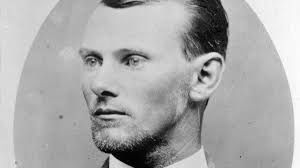
  1872 Jesse James gang robs bank in Columbia, Kentucky.
 1937 Sir Frank Whittle ground-tests the first jet engine designed to power an aircraft at Rugby, England. 
 1945 Canadian troops liberate Nazi concentration camp Westerbork, Netherlands.
  1945 US President Franklin D. Roosevelt dies in office and Vice President Harry Truman is sworn in as 33rd US President.
 1955 Polio vaccine tested by Jonas Salk announced to be 'safe and effective' and is given full approval by the US Food and Drug Administration.
  1961 Russian cosmonaut Yuri Gagarin becomes the first person to orbit Earth.


April 13th

 1796 First elephant arrives in US from India 
 1860 1st Pony Express reaches Sacramento, California.
  1954 Physicist and Father of the Atomic Bomb
Robert Oppenheimer  accused of being a communist.
 1994 Asteroid 7373 Takei discovered and named after Star Trek actor George Takei. 
 2019 World's largest plane by wingspan at 117m (385 ft), the Stratolaunch, built as a flying launch pad for satellites, takes its first flight from Mojave, California. 


April 14th

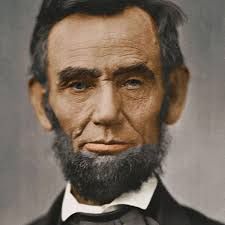
 1865 US President Abraham Lincoln is shot by John Wilkes Booth at Ford's Theater in Washington. 
 1903 Dr Harry Plotz discovers vaccine against typhoid.
 1912 RMS Titanic hits an iceberg at 11.40 p.m. off Newfoundland
 1981 1st Space Shuttle, Columbia 1, returns to Earth.
 2003 The Human Genome Project is completed with 99% of the human genome sequenced to an accuracy of 99.99% 
 2015 Archeologists announce they have found at Lomekwi in Kenya 3.3 million-year old stone tools, the oldest ever discovered and which pre-date the earliest humans 
 2018 Beyoncé is the first black woman to headline the Coachella Music Festival, her performance on this day the most-watched performance ever on YouTube 
 2019 South Bend mayor Pete Buttigieg officially announces his presidential campaign in Indiana, first openly gay candidate to run for US president 


April 15th

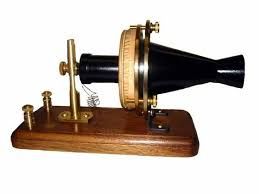
 1877 1st telephone installed: Boston-Somerville in Massachusetts 
 1912 RMS Titanic sinks at 2:27 AM off Newfoundland as the band plays on, with the loss of between 1,490 and 1,635 people 
 1941 1st helicopter flight of 1 hr duration, Stratford, Ct 
 2013 Boston Marathon bombings: 3 people are killed and 183 injured after two explosions near the finish line 
 2019 Measles cases jump 300% in first three months of 2019, according to World Health Organization, largest rise in Africa (700%) with 800 deaths in Madagascar 
 2019 Aretha Franklin posthumously receives the Pulitzer Prize Special Citation honor, first individual woman to win it since 1930 
 2019 Paris cathedral Notre Dame catches fire, toppling its spire and destroying its roof 


April 16th

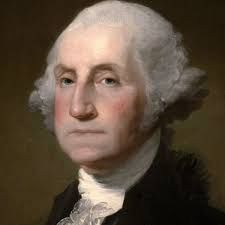
 1789 George Washington heads for 1st presidential inauguration 
 1922 Annie Oakley sets women's record by breaking 100 clay targets in a row 
 1929 NY Yankees become 1st team to wear uniform numbers 
 1993 Jury reaches guilty verdict in Federal case against police officer who beat Rodney King, 
 2007 Virginia Tech massacre: The deadliest mass shooting in modern American history. The gunman, Seung-Hui Cho, kills 32 people and injures 23 others before committing suicide. 


April 17th

 1492 Christopher Columbus signs a contract with the Spanish monarchs to find the "Indies" with the stated goal of converting people to Catholicism. 
 1961 1,400 Cuban exiles land in Bay of Pigs in a doomed attempt to overthrow Fidel Castro
 1969 Sirhan Sirhan is convicted of assassinating US Senator Robert F. Kennedy 
 2001 A letter between Gale Norton and Jeb Bush is released, stating that the Bush administration has decided to go ahead with plans to auction 6 million acres of potentially oil-and-gas-rich seabed in the Gulf of Mexico 
 2002 Four Canadian Forces soldiers are killed in Afghanistan by friendly fire from two United States Air Force F-16s, the first deaths in a combat zone for Canada since the Korean War 
 2019 Research showing pigs brains partially brought back to life at Yale University, published in "Nature" 
 2019 10 babies with "bubble boy disease" cured using a gene therapy made from HIV at St. Jude Children's Research Hospital, Memphis, according to new study 


April 18th

 1775 Paul Revere and William Dawes ride from Charlestown to Lexington warning the "regulars are coming!" 
 1783 Fighting ceases in the American Revolution, eight years to the day when it began 
 1906 San Francisco earthquake and fire kills nearly 4,000 while destroying 75% of the city 
 1983 A lone suicide bomber kills 63, at US Embassy in Lebanon 
1986 IBM produces 1st megabit-chip 
 2013 Two earth-like planets are discovered orbiting the star Kepler-62 

Thursday, April 2, 2020

Sibling Rivalry: John Wilkes Booth And Edwin Thomas Booth.

John Wilkes Booth-portrait.jpgImage result for edwin booth
John Wilkes Booth and Edwin Thomas Booth were brothers born to actor Junius Brutus Booth, who was considered one of the great American Shakespearean actors of the 19th century. John and Edwin's mother was their father's mistress, Mary Ann Holmes.

As a boy, Booth was athletic and popular, and he became skilled at horsemanship and fencing. In school he was an indifferent student whom the headmaster described as "not deficient in intelligence, but disinclined to take advantage of the educational opportunities offered him. Each day he rode back and forth from farm to school, taking more interest in what happened along the way than in reaching his classes on time".

While attending the Milton Boarding School, John met a Gypsy fortune-teller who read his palm. She told him that he would have a grand but short life, doomed to die young and "meeting a bad end". 

Edwin was older than John and was Junius' favorite. In fact, Junius despised John so much that he wouldn't even let him be in photographs with the rest of the family. This established the brothers' rivalry, which Junius encouraged.

Edwin usually performed alongside his father and John aspired to follow in their footsteps.

By 1858, Edwin and John were the most famous actors in the world. Everyone loved Edwin. John, on the other hand, lacked Edwin's culture and grace and people had mixed feelings about him. Many people would say that he was the handsomest man in America and that he had an incredible memory. However, others would say that John was violent and a scene stealer.

When the civil war broke out, John was starring in Albany, New York. He was outspoken in his admiration for the South's secession, publicly calling it "heroic." Which infuriated local citizens who felt that John was committing treason and they wanted him banned from the theater. 

Abraham Lincoln was a big fan of Edwin and wanted him to perform at all government functions.

In 1863, Family friend John T. Ford opened 1,500-seat Ford's Theater on November 9th in Washington, D.C. John portrayed a Greek sculptor in costume, making marble statues come to life.  As Lincoln watched the play from his box John was said to have shaken his finger in Lincoln's direction as he delivered a line of dialogue. Lincoln's sister-in-law was sitting with him in the presidential box. She turned to him and said, "Mr. Lincoln, he looks as if he meant that for you." The President replied, "He does look pretty sharp at me, doesn't he?"

On November 25th, 1864, Booth performed for the only time with his brothers Edwin and Junius Jr. in a single engagement production of Julius Caesar at the Winter Garden Theater in New York. He played Mark Antony and his brother Edwin had the larger role of Brutus in a performance acclaimed as "the greatest theatrical event in New York history." This made John furious. Brutus was his favorite character. Not did Edwin take his role, everyone loved his brother's performance.

John abruptly decided to join the Richmond Grays, a volunteer militia of 1,500 men traveling to Charles Town for abolitionist leader John Brown's hanging, to guard against an attempt by abolitionists to rescue Brown from the gallows by force. 

Lincoln was elected president on November 6, 1860. On April 12th, 1861, the Civil War began, and eventually 11 Southern states seceded from the Union. 

In John's native Maryland, some of the slave holding portion of the population favored joining the Confederate States of America, but  Maryland legislature voted decisively against it. It also voted not to allow federal troops to pass south through the state by rail, and it requested that Lincoln remove the growing numbers of federal troops in Maryland. Lincoln suspended the writ of habeas corpus and imposed martial law in Baltimore and other portions of the state, ordering the imprisonment of many Maryland political leaders at Ft. McHenry and the stationing of Federal troops in Baltimore.  
John saw Lincoln's actions as unconstitutional and formulated a plan to kidnap him. The plot was to abduct Lincoln, bring him to the Confederate capital of Richmond, Virginia, and use him as a bargaining chip to secure the release of rebel prisoners.

On March 17th, 1865, John and his fellow conspirators hid along a country road in Washington, D.C. Lincoln was going to go to the matinee performance of a play at Campbell Hospital to benefit wounded soldiers. Lincoln had changed his plans and never showed. After the fall of Richmond and General Robert E. Lee’s surrender at Appomattox, John decided to kill Lincoln instead.

John and his conspirators plotted to not only kill Lincoln, but Grant, Secretary of State William Seward and Vice President Andrew Johnson.
Ulysses S. Grant accepted Lincoln’s invitation to attend Ford’s Theater on the evening of April 14th, 1865. Grant backed out at the last minute, or he would have possibly been killed as well. George Atzerodt failed to follow through on his assignment to slay Johnson at his residence in the Kirkwood House hotel.

On the evening of April 14, 1865, five days after Confederate General Robert E. Lee surrendered his massive army effectively ending the American Civil War, John entered the balcony at Ford's Theater and shot Lincoln in the head. In doing so, John broke his ankle. He then raised his knife in the air and yelled," Sic semper tyrannis". (Latin for "Thus always to tyrants," attributed to Brutus at Caesar's assassination.

Laura Keene, the actress, dashed into the Presidential box and had President’s head on her lap before the doctors arrived.

At the same time John shot Lincoln, Lewis Powell stormed Seward’s house and repeatedly stabbed him. Seward was already bedridden from a near fatal accident. Seward somehow survived the savage attack.

John escaped after shooting president. Lincoln did not immediately die from the gunshot wound and was brought to Peterson House, a house across the street from the theater. He passed away the next day in Peterson House. 

Within a few days of the assassination all the conspirators were arrested except John who was shot dead after he resisted arrest. In all, eight conspirators were tried for the assassination and four of them were sentenced to death by hanging. Three conspirators were handed life imprisonment and one was booked for six years.

Contrary to John Wilkes Booth’s expectations Lincoln's assassination did not trigger a confederate revival in war. After less than a month of Lincoln’s death, the civil war also reached its logical end with a thumping Union victory.
After Lincoln's assassination Edwin decided to write a letter to his friend John B. Murray. Addressed “To the People of the United States” and published in several major newspapers in June 1865, it consists of three somber, shame-laden paragraphs in which Edwin speaks of being “prostrated to the very earth by this dreadful event.” Also in the letter, Edwin announced his retirement from acting as a penance.

However, five months after Lincoln was assassinated Edwin returned to the stage and performed "Our American Cousin", which was the play during which Lincoln was murdered.