Welcome To My Blog. I respect and appreciate comments, questions, information and theories you might have. Even if i agree with you or not, i won't delete your comments as long as they are not purposefully attacking anyone. I will not condone bullying of any kind. If you that is your intent, don't bother posting because i will delete it the moment i see it.

Wednesday, January 8, 2020

Murder At Virginia Beach:The Double Killing Of Lynn Seethaler and Janice Pietropola.

Lynn Maria Seethaler
Image result for Lynn Maria Seethaler

She was skinny and tall with beautiful blue eyes and brown hair. She was very pretty, very nice and very popular.
Lynn was born on March 11th, 1954 in Pittsburgh, Allegheny County, Pennsylvania to Paul and Phyllis Seethaler. She had a sister named Peggy and a brother named Mark. 
Image result for penn hills high school class of 1972Image result for penn hills high school class of 1972
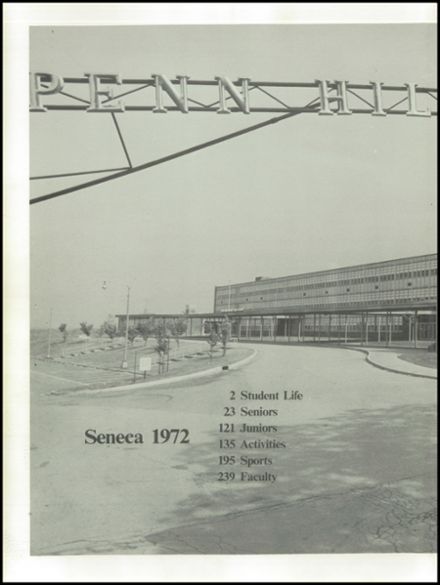
Lynn graduated Penn Hills High School in 1972. 
Image result for Lynn Maria Seethaler
She had been in Commercial, Booster Club, Rhythmettes, Student Council, Student Secretary and Secretary.   

While in her Sophomore year of high school, Lynn met Janice Piertropla.


Janice Pietropola
Image result for Lynn Maria Seethaler
She was short with beautiful brown eyes and brown hair. She was very nice, sweet and very smart with a strong worth ethic.

She was born on March 11th, 1954 in Pittsburgh, Allegheny County, Pennsylvania to Michael and Lucille Pietropola. She had two sisters, Judy and Michele, and a brother named Michael Jr.

In January of 1969, Janice and her family moved from Wilkinsburg to Penn Hills.

Janice started Penn Hills High School part of the way through her Freshmen year. While at school she had good grades and was in Commercial, Student Secretary, Honor Guard, Booster Club, Junior Homeroom Treasurer and Secretary. 

She was waitress at the Golden Circle Restaurant and later did secretarial work at Howard Hanna. She saved her money and bought a new, white Volkswagen Beetle.

Janice graduated Penn Hills High School in 1972.

After graduation Lynn worked as a secretary for Dunn & Bradstreet, Inc, Shadyside. She lived at 345 Whittier Drive in Penn Hills. And Janice worked as a secretary for the Urban Redevelopment Authority in East Liberty. She lived on 128 Golden State Drive, Verona. She was considering college and a career in journalism.

It was late June of 1973, Lynn and Janice were both 19-years-old and going on vacation to Virginia Beach. They almost changed their minds. 6 other girls were supposed to go with them, but the other ladies pulled out at the last minute. Lynn and Janice both reluctantly decided to go.

Back then, there was not much crime at Virginia Beach. The resort was seasonal and was made up mostly of mom and pop motels.  There were clubs and bars such as The Shack, The Peppermint Beach Club and Rogue's Gallery. 
Image result for Lynn Maria Seethaler
On Monday, June 25th, 1973, Lynn and Janice checked into the Farrar's motel on 10th street at Atlantic Avenue. Farrar's was family owned, one story and had 30 units, including four cottages. Lynn and Janice stayed in the first cottage closest to the beach. It had one bedroom, a living room with a couch that pulled out into a bed, a kitchen and a bathroom.

Lynn and Janice hung out with other people, went out on dates and enjoyed the sun and ocean. 
Image result for Lynn Maria Seethaler
They sent their families post cards documenting their adventure.

On Saturday, June 30th, Lynn and Janice were supposed to check out of their motel room. It was 11 a.m. and 25-year-old Mr. Taylor was working in the office and wondering why he hadn't heard from the girls yet. He wanted to get housekeeping in there to get the room ready for the next guest. He grabbed a key and headed to their cottage. He knocked and after getting no response he cracked open the door. He could see a foot on the floor living room. Mr. Taylor assumed that they were sleeping and went back to the office.

Mr. Taylor got a feeling that something wasn't right and headed back to Lynn and Janice's cottage. He pounded on the door and then pushed it open. It was partially blocked by one of the ladies. To his horror, the lady on the floor was dead and so was the other one who was in the bedroom. Mr. Taylor said that there was an awful stillness in the cottage. He pulled the door back shut and went to the office and called the police.

Virginia police and detectives rushed to the scene.

Both Lynn and Janice had been strangled. Lynn had had her neck slashed with a broken wine bottle and had been shot in the head twice with a .22 caliber gun. Janice had been raped and shot in the right side of the head three times.

Police believed the murderer removed the screen and entered through a window.

In the afternoon on June 30th,1973 a news reporter called Janice's mother Lucille to talk about Janice's and Lynn's murder.

"Janice is dead! Janice is Dead!" Lucille wailed. 

Judy, who was 16 years old at the time, ran down the stairs screaming so loud that the neighbors came out of their houses. 15 minutes later, detectives walked up the front steps. 

Janice's family gathered at Lynn's house. Janice's father, Michael, and his four brothers, took a shot of whiskey before driving to Virginia Beach to identify the girls.

The search was on for Lynn's and Janice's killer. The investigation was spearheaded by Virginia Beach homicide  Detective William Haden. 
The two men at the resort, that ladies had went out on dates with, had been interviewed and cleared. So were the rest of the people that Lynn and Janice had hung out with. Even Mr. Taylor was questioned and eliminated as a suspect.

Hundreds attended Lynn's and Janice's funerals.
Image result for Lynn Maria Seethaler
Janice was buried in her pink Senior prom dress.

Years passed. Detective Haden and other Virginia Beach investigators continued to follow leads, tracking down possible suspects as far away as California.  No suspect was found.
Image result for Ernest Broadnax
46 years after Lynn's and Janice's were murdered, Virginia police arrested Ernest Broadnax after following a strong lead and after DNA evidence found at the ladies' murder scene match his profile in the national database.

At the time of his arrest, Broadnax, also known as "Pop", was 80-years-old and living at an apartment building for veterans in St. Albans, a middle-class neighborhood in Queens. He volunteered at the Second Chance Deliverance Church, which was just a few blocks away from his home. He walked with a cane and had various health issues. 

People that knew Broadnax from church were shocked when they found out about his sinister past and had previously thought of him as family.

Broadnax was married three times in Norfolk. The first was in 1963, then in 1972, and 1975. He has a criminal history that dates back to at least 1990. His 11 convictions there include one for 1st-degree assault, two for burglary, two for weapons offenses, and three for trespassing.

The assault conviction was for a 2005 attack in which Broadnax struck a person in the arm with a metal pipe. The victim suffered a fractured arm and had to undergo multiple surgeries. Broadnax pleaded guilty and was sentenced to eight years in prison.

Both Lynn's and Janice's parents died before they found out who killed their daughters.

As of July of 2019, there has been no preliminary hearing because Broadnax had yet to be ruled competent for adjudication.

Tuesday, January 7, 2020

The Bodies In The Woods: The Unsolved Addison County Triple Murder.

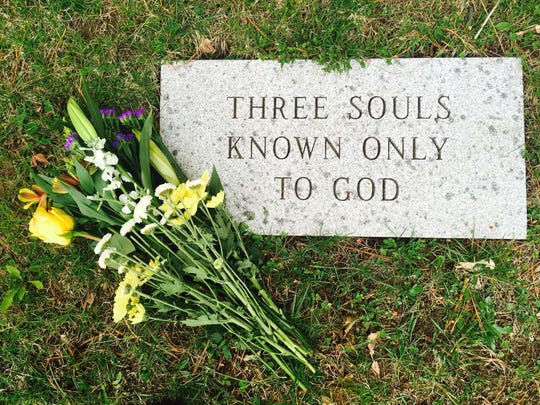
Middlebury murder facial reconstructions of the murder victims.jpg
On Wednesday, May 15th, 1935, Mary Dague and her 18-year-old daughter, Inez Perry, were on an afternoon walk in the woods in search of mayflowers. They were on an old logging road a little more than 4 miles outside of Middlebury, Vermont. On the way back, a white rock caught Inez’s eye. and she gave it a kick. But it didn't turn out to be a rock at all but rather a skull with a bullet hole right between the eyes.

The mother and daughter rushed home to call the sheriff’s office. And by nightfall, Middlebury Sheriff Ralph G. Sweet and Addison County State’s Attorney John T. Conley, along with several residents, uncovered the skeletal remains of a mother  approximately 35-45 years old and her two children, one about 9 to 11 years old and the other 13 to 15. All three had a .38-caliber Colt automatic bullet hole in the skull. 

While all had some form of dental work done, the eldest child had extensive dental work including a gold band encircling the entire set of teeth in the upper jaw with an Angle’s ribbon. The dental work was valued at $1,500 at the time.

The bodies had been wrapped together in a blanket and a green canvas awning with pulleys still attached. The road they had been found on led to Brookins/Blackmer hunting camp. The bodies had been dumped unceremoniously under a pine tree. A small tree root, about a half to three-quarters of an inch thick, had grown over the leg of one of the victims. Investigators believed the bodies had been there for two or three years.

Investigators thought that the murders happened while the three were sleeping since remnants of a pillow were also found.

Other evidence included a “few hanks of matted hair,” described as both blond and dark, possibly auburn, with some of the strands being several inches long; a small piece of a woman’s silk dress; badly disintegrated remnants of a black, possibly green, and buff striped awning; four small block pulleys; the corner of a woolen blanket; and the snap from an automobile side curtain. A flattened .38 caliber copper jacketed bullet, consistent with a Colt automatic, was also found under one of the skulls.

Detective Franzoni from the Vermont Attorney's General Office was now on the case. He started hunting down persons of interest.  R.R. Luding of Buffalo, New York was a guest of the Middlebury Hotel.  He had shown “great interest in the finding of the skeletons” and reportedly followed investigators from Middlebury to Burlington in an automobile with Indiana license plates. Police were asked to keep a lookout for him, but the search was discontinued almost as soon as it started. 

Next came Irving or Arthur Denton. Denton showed up in August 1931 buying high-price items, including a Ford automobile and a property on Starksboro Road, and paying for them in cash. He also whitewashed his property’s windows, blackened its lights, and warned neighbors to keep away. In February 1932, Denton abruptly left town ordering the sale of his property with the money going to the Pacific National Bank in Seattle, Washington. The neighbor living closest to the crime scene stated that 1932 was the year a dank odor of “decaying flesh” came from the woods.

Then there was Harold Young. He came to Burlington in 1929 to operate a store on the corner of Monroe and Champlain streets, which was part of the Grand Union Tea Company. It was believed that he was a bootlegger or in the moonshine business not too far from Buffalo, New York. People who knew Young said that he claimed “it got too hot” for him there. He also was known to own a .38 caliber Colt. John Deyette, who owned the building where the store was located, said Young was taken back after receiving a notice that his wife and child, a girl about 11 years old, planned to join him in Burlington. Soon after their arrival, Deyette told authorities that Young left with his wife and daughter for three days and returned without them. Soon after, Young also left the area.

The case went cold until January 1938.

Harvard scientists who examined the remains while they were in Boston provided a more detailed report about the victims. Due to the results of the examination, Detective Franzoni thought that the victims might be Mrs. Cora Golden and her children, Charles Jr. and Beulah Elizabeth of Milton.

Cora disappeared in 1923 with her children when she was 31 years old. At the time, Charles Jr. was 7 and Beulah was 4. If Cora and her children were killed seven years after they disappeared, the ages and year of death would align with Harvard’s estimates.

The Milton's farmhand had also disappeared around the same time as the Goldens. Detective Franzoni was able to trace Cora, the farmhand, Joseph Carter, and the children as having spent time in Hartford, Connecticut before coming back to Vermont in 1929. 

In April 1938, Detective Franzoni found Beulah living with an adoptive family in Connecticut. Franzoni then tracked down Cora and Joseph Carter, and learned they had a child together in 1924. That child was a boy, the gender Harvard scientists concluded both children to be.

It wasn't until decades later that it was found out that Cora and the farm hand were still alive and well. They used pseudonyms Cora LaFlash and Thomas Charest in Vermont and had a son named Francis. The 1930 federal Census shows the Charest family residing in New York and following Elizabeth “Cora” Charest’s death in 1938, Thomas, Charles and Francis all eventually return back to Vermont. DNA testing of a living relative of Buelah show the three unidentified persons are neither Buelah’s mother nor her brothers.

Neither the victims, nor their killer, were identified. So, the victims’ bones were stored in boxes at the state medical examiner’s office. 

Now the DNA is so degraded that it is of little use. 

In 2015, a forensic sculpture class at the New York Academy of Art, with assistance from the National Center for Missing and Exploited Children, completed facial reconstructions of the victims, using the remains as their guide.
A gravestone in Middlebury where the three unknown victims of a 1935 homicide are buried.
Once the facial reconstructions were complete, the remains were interred during a solemn ceremony at the Prospect Cemetery in East Middlebury

Who Killed Anthony Adams?

🌈Anthony "Tony" Adams🌈
Image result for Anthony Adams salt lake city utah
He was a quiet warrior and a true freedom fighter.

Tony was born on July 30th, 1953 in Baltimore, Baltimore County, Maryland. He was raised in Salt Lake City and graduated from Judge Memorial High School. While in high school he was active in the science and chess clubs, and the student United Nations. He was on the honor roll, the soccer team and the staff of the school newspaper, The Judgeonian. He was a member of the debate club. He was also a National Merit finalist. Tony possessed an extraordinary drive, thanks in no small part to the example of his mother who attended college in the 1940's, despite the obstacles of discrimination.

As a leader in the Salt Lake Chapter of the Socialist Workers Party, Tony had helped organized the Anita Bryant Protest in 1977. He was also a member of the Salt Lake Coalition for Human Rights and the NAACP. He protested on behalf of gay rights and participated in a campaign to pressure the University of Utah to divest its stock in companies that operated in South Africa during the apartheid years.

At an early age, Tony struggle with being gay and a man of faith. But, ultimately, he learned to accept himself through Metropolitan Community Church, which preached that Christ’s love and homosexuality were not mutually exclusive.

In 1978, 25-year-old Tony was attending the University of Utah and was the campaign manager for the Socialist Workers Party Congressional candidate Bill Hoyle. Tony was also a city bus driver. 

On Friday, November 3rd, Tony went home early from work at the Utah Transit Authority to his Avenues apartment. He’d had a tooth pulled and was hoping to recuperate before a political rally for Hoyle that Sunday. He never made the rally.

At about 8:45 p.m. on November 6th, which was the day before the election, Tony's boyfriend, Bill Woodbury, Rev. Bob Waldrop, and another friend, Clemens Bakwent, went to Tony's apartment at 125 E 1st Avenue. They were concerned because no one had seen or heard from him for several days. After climbing in through a window, Woodbury found Tony in the bedroom, naked and covered with blood, crumpled up against the radiator. He had his mouth open and was not breathing. Tony had been stabbed five times in the chest and twice in the neck. One neck wound extended deep enough to cut into the muscles along his spine.

A butcher knife had been discovered in Tony's bedroom in a pile of clothes. It appear that there was anything taken from the apartment and it was difficult to surmise if there was forced entry. There was damage to Tony's door, but some people that knew him said that it might have been done before the murder.

Investigators believed that Tony was killed on November 3rd, the day he came home from the dentist.

Coincidentally, police detectives were still investigating the death of 16-year-old Sharon Schollmeyer who was found strangled to death in the same apartment building in December 1977. Her case was solved in 2016, DNA evidence came back to a man named Patrick McCabe.

Two detectives originally on Tony's case were reassigned mid-investigation when Ron Millard took over. Despite coming to the crime scene after it already had been cleared by the original detectives, Millard found a knife with what appeared to be a bloodstain on it inside a utensil drawer. He theorized that it could have been a second murder weapon.

Millard also suspected that Tony's murder was a crime of opportunity and passion. That if it was premeditated, the murderer would have brought a weapon with them.

A witness allegedly saw Tony the weekend of his murder at a tavern in the company of another man who was described as white, with long dark hair, a mustache and a short beard.

Tony's case went cold, until 34 years later.

In 2012, Mickey Ann Henson was classified as a person of interest, after her death, based on a fingerprint found in Tony's apartment. The police said that in the late 1970's Henson was a drug user, a prostitute and was suspected of associating with a group known to rob gay people. This had investigators wondering if Henson was working with someone to rob Tony while he was about to get intimate with someone else and that the robbery turned deadly.

Henson’s sister, Cindy, was highly skeptical Henson had anything to do with the murder. Cindy said Henson was a warm and compassionate person, especially when she was younger. Cindy agreed that her sister was a wild child that ran away at age 11 and that she worked occasionally as an escort, but she wasn’t a criminal living on the street.

“She had a family living in Salt Lake; her dad lived up there. She had people that loved her and a good job,” Cindy said. “She was not a street rat.”

Cindy also said that her sister was bisexual and at the time had a girlfriend.

“I don’t remember her or any of her friends hurting gays, because she was one of them,” Cindy said. “She would have stood up for them.”

Henson was involved as a witness for the prosecution against white supremacist Joseph Paul Franklin, who gunned down two black men jogging in Liberty Park in 1980. Henson had been solicited for sex by Franklin and later testified against him in state and federal trials though she feared for her life in doing so.

Three weeks after Tony's body was discovered, another gay Salt Lake City man, Doug Coleman, was shot to death a few blocks away. A few months later, Mona Ulibarri, a lesbian, was raped and murdered.

Coleman’s suspected killer was arrested and sent to a mental institution, and eventually died.

Missing from Tony's evidence file, according to police, is the knife believed to be the murder weapon. Unfortunatly, before the knife went missing, it was only tested for blood type, not DNA. (No word on the status of the second knife) 

Long before the police acknowledged that the murder weapon was missing, rumors of it's disappearance made many fear that someone in the department was the killer of both Adams and Coleman. These same people felt that the police were covering it up to avoid a scandal.

What is more interesting is, of all the murders that happened in Salt Lake City, from 1978 to 1984, only those three are missing pieces of evidence. 

No one has ever been charged in any of the three murders.

If you have information about the missing evidence or about a Salt Lake City cold case, call dispatch at 801-799-3000 and ask to speak with the homicide division. You can leave a tip and remain anonymous.

Monday, January 6, 2020

They Still Haven't Found The Rest Of Stephanie Casberg's Body Or Her Killer.

Stephanie Marie Casberg
She was described as a beautiful girl with long red hair. She was well-liked, popular and a very good student. She was outgoing, liked fun, excitement and going to dances. Stephanie was always happy and wherever she would go she'd make friends.

She was born in Colorado Springs, Colorado on July 11th, 1951. Her mother's name was Mary Alberts, and her father, was Charles Casberg. Charles was an employee at Fisher Body until he moved the family to Milwaukee in 1957. Stephanie also had a grandfather that was a former police officer.

In June of 1969, 17-year-old Stephanie graduated from Riverside High School. She lived with her parents and six brothers in an East Side duplex. 
Image result for Marc's Big Boy Juneau Village, 1111 N. Van Buren St.
She worked as a part time waitress at Marc's Big Boy in Juneau Village, 1111 N. Van Buren St.

On Monday, July 7th, 1969, Stephanie's youngest brother, Kevin, watch her as she got ready for work. She left home at 5:30 p.m. When she didn't show up for work her manager called Stephanie's home and was told that she wasn't there.

Sometimes Stephanie would stay at various friends' houses, so her family wasn't concerned when she didn't come home on Tuesday. After there was still no word for her on Wednesday, her family was going to call the police and report her missing. However, they never did report her missing. 
Stephanie's family heard on the radio, the discovery of  a young woman's severed head and arms and a leg by a fisherman, Charles April, and his two sons. They were just off the 8 Mile Road Bridge when Mr. April's 10-year-old son noticed what appeared to be a leg on the bank of the Root River. Mr. April then drove down the road until he met Robert Koeing, who was operating a road grader.  After he told Koeing what happened, Koeing ran to the home of Mrs. Edmund Matuszewski, who called the sheriff's department.

On the way to report Stephanie missing, her father decided to stop by and make sure that it wasn't his daughter's remains that had been found. Charles showed police a photo of his daughter and in turn they showed him negatives of the girl's head that had been found wrapped newspaper, in a brown paper bag. The officers then took him to the morgue. There, Charles' darkest fear was realized. It was in fact Stephanie, her life cut short, just days before her 18th birthday.

Divers searched the area for three hours, but could not locate Stephanie's missing parts.
Searches followed the river upstream to Franklin in Milwaukee  County where they found a pink blanket and Stephanie's purse in a clearing. Also, a photo of Stephanie had been found, torn to shreds and discarded by Franklin road.

Authorities were never able to determine a cause of death. There were no serious abrasions or contusions and no broken bones. Though there were two small puncture wounds found on her neck and she had been dead for a day or two. 

Stephanie had been dismembered by something sharp and the limbs and head had been removed at the joints. And near her remains, detectives found a brown shoe. In her left ear was a bronze, rectangular shaped earring with a blue oval stone.

Police questioned several people, such as her school teachers, people she worked with at the restaurant, including a young cook who dated her until May.

After an anonymous tip, police arrested an 18-year-old East Side Milwaukee man at a bus depot on Friday the week Stephanie's body was found. However, he was released after lengthy questioning.

To this day, police have not made an arrest in Stephanie's murder, leaving her family to wonder for all these years what happened to her.

Her youngest brother, Kevin, says he still feels the loss of his sister and keeps a photo of her on his mantel.

“It hurts,” he said. “Hurts to this day.”

Sunday, January 5, 2020

Did Virginia Carpenter Run Away, Or Was She The Victim Of The Texarkana Phantom Killer?

🥼Mary Virginia "Jimmie" Carpenter🥼
Image result for mary virginia carpenter
She was likable, beautiful, radiant and happy. Even though her first name was Mary, people called her Virginia or "Jimmie". She had beautiful dark brown hair and brown eyes.

Virginia was born January 25th, 1927 in Texarkana, Texas.  Texarkana is close to the state lines of Texas, Arkansas and Louisiana. Virginia was Hazel E. and Floyd Carpenter's only child.


She began walking at a young age and she "inherited a bad streak from me of wanting to walk a little too far from home," said her mother. Her mother would scare Virginia into staying close to home by telling her that big dogs roamed the streets.

Throughout her life, Virginia went through a lot of debilitating events. When she was three, she rolled down the back steps at her home and hit a tree, but she had no injuries. Three months afterward, she caught a bad case of influenza and could not walk.  She got better for a while but then a severe attack left her badly crippled. One day in Memphis, Tennessee, a surgeon found an infection in Virginia's right hip bone. It left perforations in it similar to tiny pinholes. For a few months, Virginia was placed in a device that pulled her leg back into proper position. 

Later, Virginia was able to walk better with the use of a steel brace that fitted into the heel of her shoe which then came up to a leather-rolled "saddle" around her hip. Virginia was put in kindergarten and soon became self-conscious and lost weight due to a loss of appetite. She was taken out of school but returned a year later when the brace was removed. 

When she was 12, a specialist said that she was completely cured. 

Virginia attended Arkansas High School. Her teachers described her as a child with an unusual amount of common sense and loyalty. She was a quiet girl and rarely participated in activities because she tired easily and had a limp in her right leg. She joined the band and became a majorette. She joined a sorority after receiving a bid from each one. 

Not long after starting high school, Virginia's father became seriously ill. He died two years later when she was 15.


After graduating from Arkansas High in 1944, she went to the University of Arkansas to study journalism. After a year, she came home and told her mother that she wanted to go into laboratory technician training but it required science, which she had never taken. She went to Texas State College for Women from September 1945 until February 1946 when she had to quit and take care of her mother who became ill. She planned on finishing her schooling within a year.

After her mother became ill, she underwent major surgery. A week later, Virginia was struck with appendicitis and was also operated on. A month later, they were both taken home by a student from Texas A&M University named Mac. Virginia fell in love with Mac, became engaged, and set a date for their wedding. Her grandparents did not approve of the engagement. Three weeks before their wedding date, Virginia broke it off. 

Ten days before school was out, Virginia went to the annual picnic from Texarkana Junior College at a lake near Daingerfield. About 5 p.m. that evening, Virginia came home with a terrible sun burn and not feeling well. It turned out that she had sun stroke and kept passing out. A doctor was called and he prescribed her with rest and quiet for a few days. After the third day, Virginia made an effort to take her final exams at school. While there, she told her teachers about her love affair that did not work out and that she fell in love again but the boy did not love her.

In 1948, she took up sketching and became quite good. Mrs. Carpenter said that a portrait Virginia did from memory of her father was one of the best likeness she had ever seen. Virginia, who was still recovering from her sunburn, packed her brown steamer trunk, a matching makeup case a black pasteboard hatbox and red purse, which contained no more than 20 dollars. She was looking forward to her new adventure as a lab technician student at TSCW in Denton, which was six hours away.

On June 1st, 21-year-old Virginia was wearing a light white chambray dress with brown and green stripes or red. Her dress had silver buttons down the front. She was wearing a small white straw hat with the brim flipped up and a white feather stuck in the back, red leather platform high-heeled shoes, and a gold Wittnauer watch. Virginia and her mother ran to the Texarkana Union Station and caught the Texas & Pacific Texas Special #31 train moments before it left. 

"I was so in hopes we would find the train gone so that I could drive her down the next morning. There was a tinge of disappointment when I saw the train had not left, but she refused to get on until she kissed me goodbye; and as she stood on the rear platform of the train waving goodbye, I wondered if there was anyone more radiant and beautiful. In my heart I offered a silent prayer because she was mine," said Virginia's mother.

It was 3 p.m. when the train left the station. 

While on the train, Virginia met Marjorie Webster, a middle-aged school teacher who was from also Texarkana and enrolling at TSCW .

After arriving in Denton, both women hired a taxi to take them to the college dormitories. Their cab driver was a man named Edgar Ray "Jack" Zachary. As Webster was being dropped off at the Fitzgerald dormitories, Virginia realized that she forgot to check on her trunk at the Denton train station. Webster asked if she needed to ride back with her, but Virginia said that she'd be alright. After arriving again at the station, Virginia went inside to get her trunk but came back a few minutes later claiming that she could not get it. She spoke to a railroad employee named Mr. Butrill, who told her the trunk would not arrive until later. Zachary told Virginia to sign the back of her claim check and that he would pick it up and deliver it to her in the morning. She agreed and gave him her luggage receipt after writing "Virginia Carpenter, Room 200--Brackenridge", and a dollar for the extra trip.

It was 9 p.m. when Zachary delivered Virginia to Brackenridge Hall. There was no moon, and the street lights were out due to repair work on a cable. Upon getting out of his taxi, Zachary observed Virginia walk up to a light-colored convertible, with two men standing by it, parked just outside the dorm. One of the men was tall and the other was short and stocky. Zachary said that it seemed as thought Virginia seemed surprised to see them.

"Well, what are y'all doing here?" Zachary heard Virginia ask the men. The shorter boy talked to Virginia and lifted her on the curb. Virginia then told Zachary to place her luggage on the ground because the boys will get them for her and to leave her trunk there in the morning as well. After doing so, Zachary drove off.

Reports claimed that a nightwatchman saw Virginia get out of the cab and into the convertible.

The next morning, Zachary dropped the trunk off and set it on the front lawn of Brackenridge Hall. After being there for two days, it was taken to the office. The dean of the college, Mrs. Mattie Lloyd Wooten, later explained to Mrs. Carpenter that it was the first time someone did not deliver luggage to the room.

On June 4th, Virginia’s boyfriend, Kenny Branham of Dallas, called her mother because he had been unable to get a hold of her since she left for Denton. This worried Mrs. Carpenter, who then called TSCW and found out that Virginia had never check into her dorm. Virginia's mom then called friends and relatives that her daughter may have tried visiting, but they had not heard from her.

The next day, around 12:30 a.m., Virginia's mom called the local authorities and reported her missing. The Texarkana police told her to "just go to bed and we'll get on the case in the morning", but she could not sleep, so she and Mrs. Lucille Bailey, a friend who was living with her, left for Denton at 2:10 a.m. Virginia's uncle and friends also went to Denton to help assist the police in their search. 

Ponds and lakes were searched as well as the woods, tanks, storm drains, creeks, country roads and abandoned wells. The search went statewide as police checked out drivers of light-colored convertibles in Texarkana and Denton. Even the Texas ranger got involved in the search. There was no trace of Virginia found.

Some of Virginia's former boyfriends stated she became infatuated easily and speculated she ran away with a lover, but her family did not believe she would have left without telling them.

On June 6th, a gas station attendant in Aubrey, Texas, saw Virginia's picture in that morning's newspaper and called the police. He reported a yellow convertible with Arkansas license plates occupied by two boys and two girls stopped at his station two days after Virginia's disappearance. And the girl resembled her.

On Saturday, June 8th, a girl matching Virginia's description was see  riding in a car with two boys in Mena, Arkansas. 

Kenny Branham was interviewed and took a lie detector test and passed. Zachary was also interviewed. Police learned that Zachary had a record for petty crimes and a reputation for being abusive. On Friday, July 9th, Zachary took a polygraph test which concluded that he had no connection to her disappearance. Years later, Zachary’s wife told authorities that she had lied about her husband’s whereabouts the evening that Virginia disappeared. and that he didn’t return home until 2 or 3 a.m. the following morning. Although never charged in connection with Virginia's disappearance, Zachary later passed a second polygraph test.

On Friday, June 11th around 9:00 p.m., a ticket agent at a bus station in DeQueen, Arkansas, saw a girl who resembled Virginia getting off a bus from Texarkana. She was wearing a red dress and carrying a red purse. She waiting nervously in the lobby  and asked about local hotels. Ten minutes later, the girl departed with a young man about 25- or 26- years old, weighing about 135 pounds, with light brown hair, and wearing a white shirt with khaki trousers. A few moments after their departure, the ticket agent received a phone call from a woman asking if "Miss Virginia Carpenter" was there. The next morning, the ticket agent learned about Virginia's disappearance and reported her sighting to the police. When the ticket agent was later showed two groups of pictures, she pointed out Virginia as the girl she had seen. Police checked hotels and tourist camps but came up with nothing. 

By July 12th, Mrs. Carpenter said she had checked all leads in the case but was no closer to learning of her daughter's whereabouts.

The next year, on Friday, January 14th, the Houston Press received a letter written in pencil, signed by Mrs. Gladys Bass from Chireno, Texas, who claimed that she and her friends met a girl who was well-dressed and well-educated who had been hitchhiking. The girl told them she was hungry and had no money. "She called herself Virginia. She talked properly, had long brown curly hair that touched her shoulders, and wore a white hat with a feather in it, a striped dress and blue sweater," she wrote. She said while they were eating at a cafe, the girl claimed to have run away. They all departed thinking that she was telling a story. It was not until later they believed that the girl was Virginia.

On June 9th, 1955, seven years after her disappearance, Virginia was considered officially dead.

In 1957, Zachary was charged with attempted rape, but the charge was dropped after the victim asked authorities not to prosecute.

On October 18th, 1959, a three-by-one wooden box was discovered, containing female bones including a skull, in a smokehouse near an abandoned farmhouse 7.5 miles northeast of Jefferson, Texas. The bones, which the previous owners of the farmhouse admitted to digging up from a "Negro" cemetery, had a deformity in the right leg which made it shorter than the left, similar to Virgina's. However, the dental work did not match

Mrs. Carpenter died in 1980.

Zachary died in 1984.

In 1998, authorities received a tip that two men had raped and killed Virginia shortly after her disappearance and buried her body in a dam at a stock tank near the TSCW. The suspects were both deceased by 1998 and were not publicly identified. Authorities searched the dam after receiving the information, but uncovered no evidence.

Two winters before Virginia disappeared, five young people were murdered in lovers' lanes in Texarkana. The crimes are believed to have all been committed by the same person. The murderer was never caught and became known as the Texarkana Phantom Killer.

Virginia was actually acquainted with three of the killer's victims. Authorities investigated to see if there was a link between her disappearance and the Texarkana slayings, but they found no evidence to support this theory.

Even though Virginia was an only child and her parents aren't alive anymore, three of her cousins still hope to get answers in her case.

At the time of her disappearance Virginia was 5'3" tall, 120 pounds with brown hair, brown eyes. She walked with a slight limp. She was also recovering from a severe case of sunburn.

Will You Help Catch Peggy Cox's Killer?

💜Peggy Cox💜
Image result for Peggy Cox tennessee
She was a single mom, who divided her time between church, work and her kids. She descended from local "die-hard Catholic" lineage. She seemed to find happiness in little things. She could read a romance novel a day and had a thing for Sean Connery.

Peggy was born on February 1st, 1942.

She got married in her early 20's to Donald Cox. She met him through a church group. He was a union man who followed in his dad's footsteps to work at the same phone company. Peggy and Donald had three kids together named Desiree, Jude and Rachel.

In 1973, a car crash left him in a vegetative state.

Although her family helped out with Donald, who died in 1983, caring for him took a toll on her. And she had short bouts of depression. 

A short time after Donald passed away, Peggy moved the family to Thompson's Station, where they'd be closer to her parents and siblings. Their house was on a gravel road with water from a well.

Her kids taught her to swim.

"She was the only mom at the pool who would do forward somersaults into the pool," Desiree Cox recalled.

Peggy worked at Hardee's. Co-workers called her "Mama," and her children's friends would swing by the drive-thru just to say hello.

Jude Cox, who lived at home after graduation, said "she was about my best friend in high school."

When they worked at Hardee's together, she'd give him rides to the restaurant. They could talk about anything.

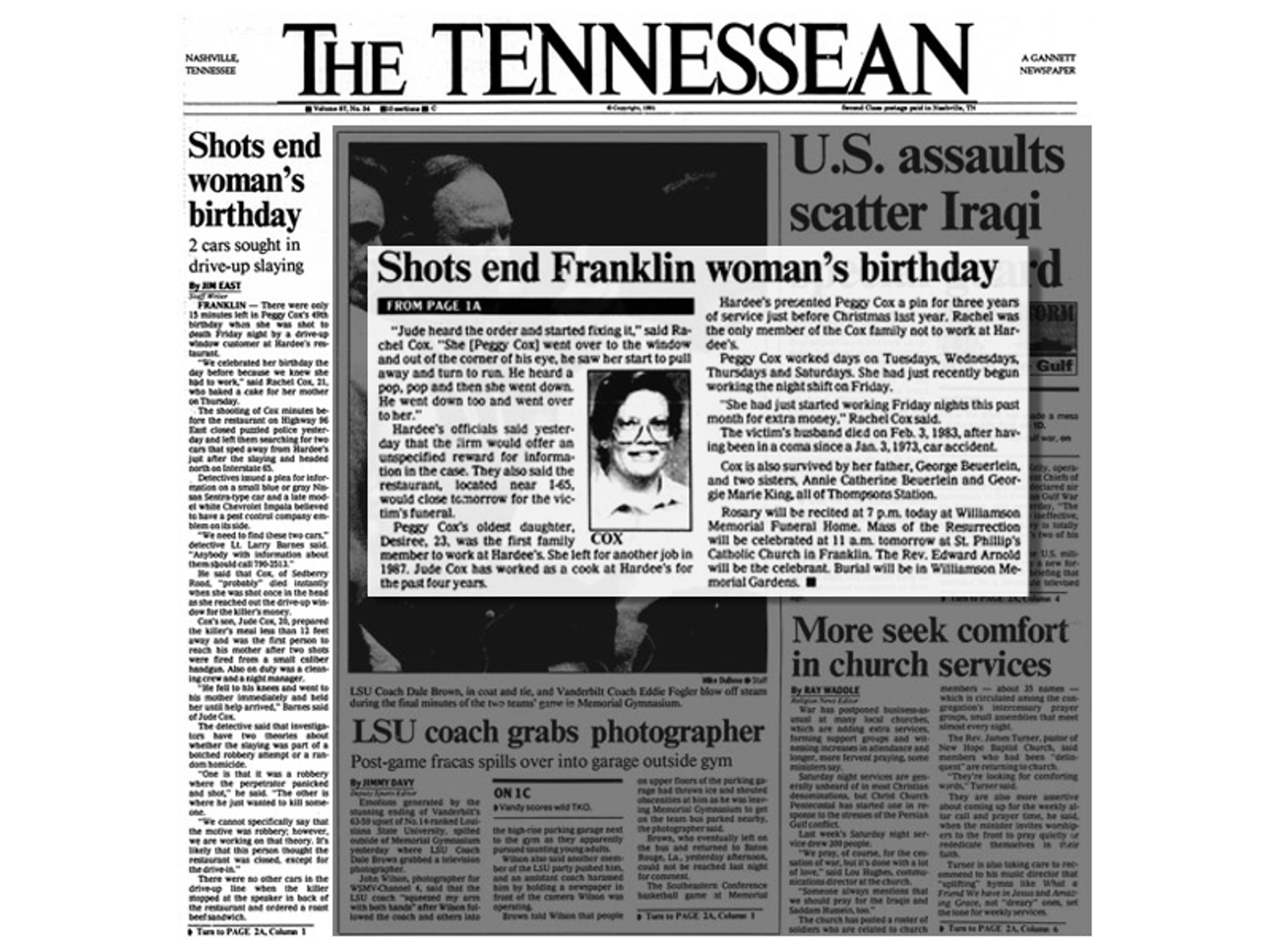
On Peggy's 49th birthday, February 1st, 1991, she hadn't even been scheduled to work that evening, but there she was, working the drive-thru. 
The restaurant at 1315 Murfreesboro Road in Franklin Tennessee. Which was located on a sparse commercial strip along Highway 96. 

It was 15 minutes from closing time. It was dark, and no pedestrians passed by in the chill. No customers were in the restaurant. And the manager who was doing paperwork in a back office. There was no surveillance camera  to capture the face that went to the male voice that ordered a roast beef combo at the drive-thru. As her son Jude, prepared the order, he heard two gunshots and saw his mother get shot in the back of the neck as she turned away from the window to run.  Peggy dropped to the floor and so did Jude. He didn't know whether more bullets might be flying. He went to his mother immediately and held her until help arrived. 

The manager made the frantic 911 call. Within moments, a Franklin police officer, Kevin Teague, arrived at the scene. But by then the killer was gone. Jude was clutching his mother's bloody glasses as he talked with police. This is when Rachel showed up and Peggy was taken to the hospital, where she died from a single gunshot wound to the neck. The second bullet was recovered from behind a vending machine.

Two vehicles were seen speeding away from the scene and headed north on Interstate 65. One was a blue or gray Nissan Sentra and a late model Chevrolet Impala, which might have had a pest control company logo on the side. About a month later, police identified and ruled out the driver of the Impala. But they never found the Sentra.
Image result for Peggy Cox tennessee february 1 1991
Early on, police said the shots may have come from someone in a small blue-gray car or a white Impala. Investigators thought that maybe Peggy's murder was a random shooting or a botched robbery attempt where the perpetrator got spooked. They also were entertaining the possibility that it was a gang initiation.

In 2013, the Vidocq Society, a members-only elite cold case organization in Philadelphia was looking at the case. The Vidocq Society is made up of members from 70 different specialties, like forensic professionals, like FBI profilers, investigators, scientists, psychologists and others.

With no evidence left behind and no direct witnesses, Peggy's case went cold. 

The FBI is offering a reward of up to $25,000 for information leading to the arrest and conviction of the individual or individuals responsible for this crime.

If you have any information concerning this person, please contact the Franklin Police Department's "Catch Peggy’s Killer" tip line at (615) 550-8404, or text 615FPD along with their tip to 847411.