Welcome To My Blog. I respect and appreciate comments, questions, information and theories you might have. Even if i agree with you or not, i won't delete your comments as long as they are not purposefully attacking anyone. I will not condone bullying of any kind. If you that is your intent, don't bother posting because i will delete it the moment i see it.
George Sodder imgrated from Tulia, Sardinia, Italy in 1908.After a few years, he started his own trucking company in Virginia. At first hauling fill dirt to construction sites and later hauling coal that was mined in the region. Jennie Cipriani, a storekeeper's daughter there, who had also come to the U.S. from Italy in her childhood, became his wife The couple settled outside nearby Faytteville,.In 1923, they had the first of their ten children. George's business prospered,had strong opinions about many subjects, and was not shy about expressing them, sometimes alienating people. In particular, his strident opposition to Italian dictator Benito Mussolini had led to some strong arguments with other members of the immigrant community. The last of the Sodder children, Sylvia, was born in 1943. By then, their oldest son, Joe, left for the military.The following year, Mussolini was deposed and executed.George Sodder's criticism of the late dictator had left some hard feelings.. 1945, a life insurance salesmen warned George that his house would "would go up in smoke ... and your children are going to be destroyed" after he had refused the life insurance. Another visitor, ostensibly seeking work, took the occasion to go around to the back and warned George that a pair of fuse boxes would "cause a fire someday." George had just had the house rewired when an electric stove was installed and the local electric company had said afterwards. In the weeks before Christmas that year, his older sons had also noticed a strange car parked along the main highway through town, its occupants watching the younger Sodder children as they returned from school.
Timeline
12:30am Christmas
Jennie Sodder had a phone call with a woman whose voice she didn’t recognize asked for a name Jennie was also not familiar with. She heard other voices in the background along with clinking glasses and “weird laughter.”When Jennie got off the phone, she checked on her children. She noticed that lights were on and the curtains were closed.She found one child (Marion) asleep on the couch and returned her to bed assuming the other children were in the attic and had forgotten to close down the house.
1:00 am
Jennie Sodder woke up again to the sound of “an object hitting the house’s roof with a loud bang, then a rolling noise.” She went back to sleep.
1:30 am
Jennie Sodder woke up again, this time to the smell of smoke. She got up and found a fire in George’s office (also where the fuse box and telephone wires were).
Jennie woke up George and they escaped the house with four children: Marion, Sylvia, John and George Jr.
The family yelled at the house, assuming they would wake the other children who slept in the attic. These were the children who had stayed up later than the rest of the family and Jennie had assumed went to bed without shutting the lights off.
They did not hear from the other children and could not go upstairs to get them because the staircase was aflame.
Next, the family tried to call for help. The Sodder phone did not work so one of the children ran to a neighbor’s and called.
The family tried to locate their latter in order to check on the children in the attic. It was usually resting against the side of the house but was now missing.
George Sodder tried to use both of his trucks to drive closer to the house so that he could crawl up to the attic. Both were previously in good working order and now would not start.
Because of these various delays and because the fire department was small and volunteer only (most of the firefighters were overseas serving in the war), they did not arrive until morning when the family assumed the other five children had already died.
When the fire department finally did arrive and began going through the ashes of the Sodder house, they did not find any bones. The fire chief still believed the children died in the fire.
After the fire
They found the family ladder had been moved from the side of the house and hidden in an embankment hear the home.
Someone from the telephone company discovered that someone had crawled up a telephone pole and cut the phone line leading to the Sodder’s house.
George Sodder was confused about why neither of his previously working trucks would move that night.
A local bus driver provided an alternate account.: “The driver of a bus that passed through Fayetteville late Christmas Eve said he had seen some people throwing “balls of fire” at the house. A few months later, when the snow had melted, Sylvia found a small, hard, dark-green, rubber ball-like object in the brush nearby. George, recalling his wife’s account of a loud thump on the roof before the fire, said it looked like a “pineapple bomb” hand grenade or some other incendiary device used in combat. The family later claimed that, contrary to the fire marshal’s conclusion, the fire had started on the roof, although there was by then no way to prove it.
People in the town claimed they saw the missing children in a vehicle the night of the fire, or have seen them since.
In 1949 the site of the house fire was excavated. Human vertebrae bones were found, but an expert said they could only come from a human aged 16-23 and had never been exposed to fire. The oldest of the missing children was 14 at the time of the fire.
The expert also noted that it was “very strange” that more bones weren’t found, as they should not have burned up in that situation.
Another sighting: “A woman who ran a Charleston hotel, claimed to have seen the children approximately a week afterwards. “I do not remember the exact date”, she said in a statement. The children had come in, around midnight, with two men and two women, all of whom appeared to her to be “of Italian extraction”. When she attempted to speak with the children, “[o]ne of the men looked at me in a hostile manner; he turned around and began talking rapidly in Italian. Immediately, the whole party stopped talking to me”.
In 1967 Jennie Sodder received a photo in the mail of a man resembling one of the missing children, Louis Sodder. The back of the photo read:
“Louis Sodder I love brother Frankie Ilil boys
A90132 or 35”
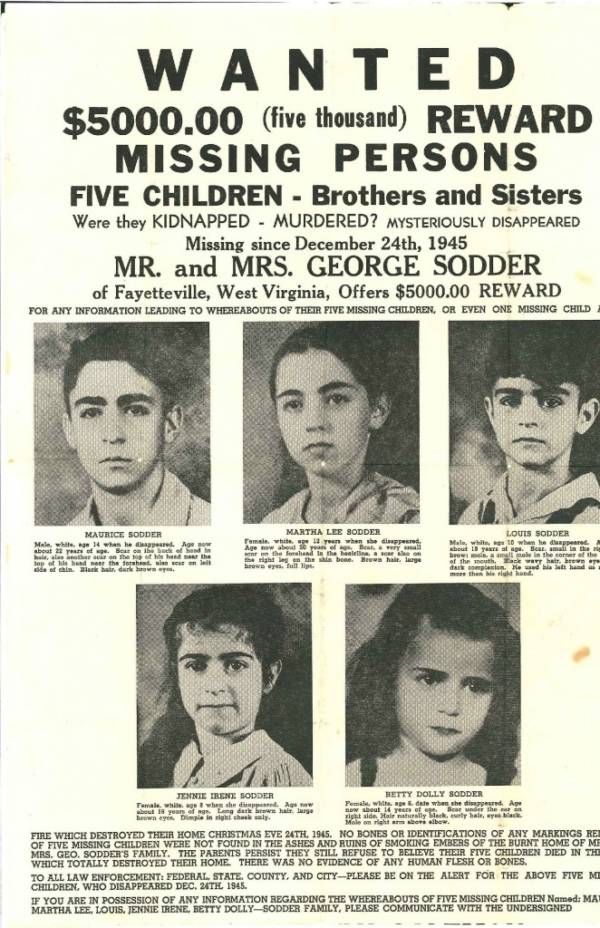
With the end of official efforts to resolve the case, the Sodders did not give up hope. They had flyers printed up with pictures of the children, offering a $5,000 reward (soon doubled) for information that would have settled the case for even one of them. In 1952, they put up a billboard at the site of the house (and another along U.S. route in Ansted) with the same information..It would in time become a landmark for traffic through Fayetteville on U.S.Route 19 (today State Route 16)
Who did it? And What Happened it the kids?
The family, along with some other town residence believe the Sicilian Mafia may have taken the children and started the fire in an attempt to extort money from the Sodders, though no one has reached out to them to ask for money.
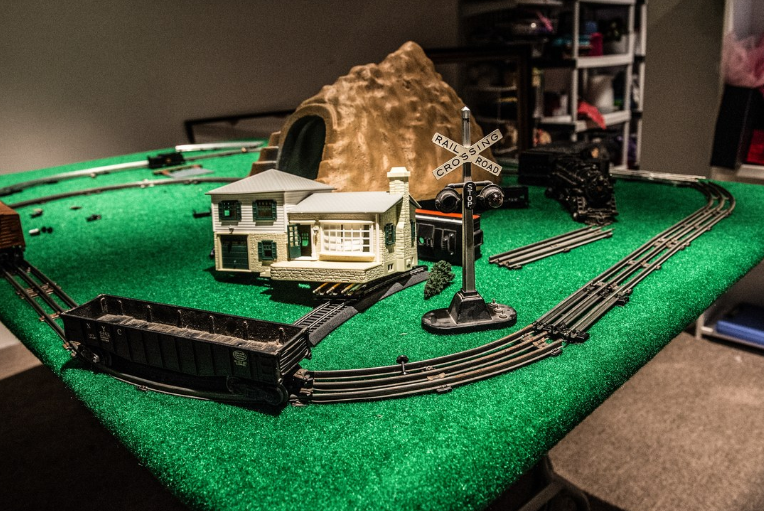
Did you know that one of the marks found on JonBenet's body was once thought to have come from her brother's toy train? The room of trains was in the basement close to the cellar where her body was found. #JonBenet
JonBenét Patricia Ramsey, was an American child beauty queen, was born August 6, 1990 Atlanta, Georgia. She was the younger of two children of Patsy and John Ramsey. She had a brother named Burke, who was 3 years older. Her first name is a feminized portmanteau of her father's first and middle names. JonBenét was enrolled in kindergarten at High Peaks Elementary School in Boulder, Colorado.
Jonbenet was laid to rest at St. James Episcopal Cemetery in Marietta, Georgia. She was interred next to her much older half-sister Elizabeth Pasch Ramsey, who had died in a car crash four years earlier at age 22.
Basics
On December 26, 1996, at 5:52 A.M., JonBenet's mother placed a 911 call stating she found a ransom note and her daughter was kidnapped.
Three minutes later, two police officers responded to the 9-1-1 call. They conducted a cursory search of the house but did not find any sign of forced entry. Officer Rick French went to the basement and came to a door that was secured by a wooden latch. He paused for a moment in front of the door, then walked away without opening it.
According to statements that Patsy gave to authorities on December 26, 1996, she realized that her daughter was missing after she found a two-and-a-half-page handwritten ransom note on the kitchen staircase. The note demanded $118,000 for the child's safe return. The note did not have any fingerprints. The note and a practice draft were written with a pen and pad of paper from the Ramsey home.
John made arrangements to pay the ransom. A forensics team was dispatched to the house. JonBenét's bedroom was the only room in the house that was cordoned off to prevent contamination of evidence. No process was taken to prevent contamination of evidence in the rest of the house.
Meanwhile, friends and the family's minister arrived at the home. Victim advocates also arrived at the scene. Visitors picked up and cleaned surfaces in the kitchen.
Boulder detective Linda Arndt arrived at about 8 a.m. MST, with the goal of awaiting the kidnapper instructions, but there was never an attempt to claim the money.
At 1 p.m. MST, Detective Arndt asked John and Fleet White, a family friend, to search the house to see if "anything seemed amiss. John and White started their search in the basement. John then opened the latched door that Officer French had failed to open and found his daughter's body in one of the rooms. JonBenét's mouth was covered with duct tape, a nylon cord was found around her wrists and neck, and her torso was covered by a white blanket. John immediately picked up the child's body and took it upstairs.
Each of the Ramseys provided handwriting, blood, and hair samples to the police.
John and Patsy participated in a preliminary interview for more than two hours, and Burke was also interviewed within the first couple of weeks following JonBenét's death.
Autopsy
JonBenét had been killed by strangulation and a skull fracture. The official cause of death was "asphyxia by strangulation associated with craniocerebral trauma." There was no evidence of conventional rape, although sexual assault could not be ruled out. No semen was found, there was evidence that there had been a vaginal injury and at the time of the autopsy it appeared her vaginal area had been wiped with a cloth. Her death was ruled a homicide.
A garrote that was made from a length of nylon cord and the broken handle of a paintbrush was tied around JonBenét's neck and had apparently been used to strangle her. Part of the bristle end of the paintbrush was found in a tub containing Patsy's art supplies, but the bottom third of it was never found.
The autopsy also revealed a "vegetable or fruit material which may represent pineapple" which JonBenét had eaten a few hours before her death.
Photographs of the home taken on the day when JonBenét's body was found show a bowl of pineapple on the kitchen table with a spoon in it. Both John and Patsy said they did not remember putting the bowl on the table or feeding pineapple to JonBenét. Police reported that they found JonBenét's nine-year-old brother Burke Ramsey's fingerprints on the bowl. The Ramseys have always maintained that Burke slept through the entire episode until he was awakened several hours after the police arrived
Other Evidence
Forensic investigators extracted enough material from a mixed blood sample found on JonBenét's underwear to establish a DNA profille. That DNA belonged to an unknown male person. The DNA was submitted to the FBI's Combined DNA Index System (CODIS), a database containing more than 1.6 million DNA profiles, but the sample did not match any profile in the database. In October 2016, new forensic analysis revealed that the original DNA actually contained genetic markers from two individuals other than JonBenét.
Basement Window was broken.
It was determined that there had been more than 100 burglaries in the Ramseys' neighborhood in the months before JonBenét's murder. There were 38 registered sex offenders living within a two-mile (3 km) radius of the Ramseys' home
Timeline
December 25th,
10 p.m.
JonBenét had been up late with her parents for a family friend's party. She fell asleep in on the car ride home. John and Patsy Ramsey maintain they last saw their daughter alive when they put her to bed on Christmas night.
December 26th,
12 a.m.
The family’s neighbor, Scott Gibbons, remembers seeing a light on in the Ramseys’ kitchen.
2 a.m.
Neighbor Melody Stanton allegedly hears a scream from the Ramseys’ home. Her husband then reportedly hears the sound of metal on concrete “sometime after the scream.” Years later, Melody backtracked on her statements, stating she actually heard the noise two nights prior.
5:30 a.m.
Patsy Ramsey gets up to make coffee and reports finding a two-page note on the back staircase stating that JonBenét had been kidnapped. The note claims to be from “a small foreign faction” demanding a ransom of $118,000 in cash.
5:45 a.m.
Shortly after finding the note, Patsy calls family friends Fleet and Priscilla White and John and Barbara Fernie.
5:52 a.m.
Patsy finally calls the police, detailing the supposed kidnapping and the demands on the ransom note.
5:59 a.m.
Officer French arrives on the scene.
6-8 a.m
Four more officers arrive at the Ramsey residence: policemen Veitch, Weiss, and Barcklow, and their supervisor, Reichenbach. JonBenét’s parents have friends come to help search the home, including the aforementioned Whites, Fernies, and Reverend Hoverstock. Victim advocates and crime scene investigators are also present in the house.
8:10 a.m.
The first detective on the case is Linda Arndt, who immediately begins her investigation. She fails to secure the crime scene.
10:30 a.m.
John Ramsey goes missing for at least an hour, leaving the house to supposedly “pick up the mail.” It's later determined this couldn’t be true, given the family's mail was delivered through a slot in the front door.
1 p.m.
Detective Arndt tells a resurfaced John Ramsey that police will be conducting a search of the house. He and his friend, Fleet White, join in.
1:05 p.m.
John and Fleet discover JonBenét’s body in a spare room in the basement. She's suffered a skull fracture and strangulation by a garrote. Her mouth and neck are bound with duct tape, which the investigators remove. Officials further tamper with evidence by moving her body upstairs to the living room.
1:30 p.m.
Boulder policemen Ron Walker and Larry Mason arrive and search the basement and wine cellar for further clues into JonBenét’s death. They finally secure the home, preventing further arrivals.
1:40 p.m.
John Ramsey calls his pilot and is allegedly heard asking him to prepare a plane to Atlanta. Meanwhile, law enforcement instructs the family not to leave town.
1:45 p.m.
Heeding the officer’s warning, the Ramseys leave their house with plans to stay the night at the Fernies’ home.
2:30 p.m.
Police conduct an interview with JonBenét’s brother Burke, which reveals the nine-year-old had allegedly slept through the events of the previous night. At some point after this, his father is advised to procure an attorney, which he does by hiring friend Mike Bynum.
The Suspects
John Ramsey
He was a businessman who was the president of Access Graphics, a computer system company that later became a subsidiary of Lockheed Martin. His first marriage ended in divorce in 1978, and his two surviving adult children (a son and a daughter) lived elsewhere. Another daughter, Elizabeth, died in a 1992 car crash. In 1991, John moved his second family to Boulder, where Access Graphics' headquarters was located.
He was ask to help assist police and search his house from top to bottom with a friend. Instead he started with the basement where the body was found. He ripped the ductape of her mouth and carried her upstairs. In doing so, he contaminated the crime scene.
His previous bonus from work was almost exactly the amount that the ransom note asked for.
He was in the house when JonBenet died.
The note and a practice draft were written with a pen and pad of paper from the Ramsey home.
Patsy Ramsey
Patricia Ann "Patsy" Ramsey was an American beauty pageant winner who won the Miss West Virginia Pageant at age 20 in 1977.
The ransom note came from her notepad.
The ransom note was probably written by a woman.
According to a Colorado Bureau of Investigation report, "There are indications that the author of the ransom note is Patricia Ramsey." However, they could not definitively prove it.
She was in the house when Jonbenet died.
Former Ramsey housekeeper Linda Hoffmann-Pugh, thought Patsy Ramsey had killed JonBenet.
There was a swiss army knife found by Jonbenet's body. The housekeeper said "Only Patsy could have put that knife there. I took it away from Burke (JonBenet's older brother) and hid it in a linen closet near JonBenet's bedroom. An intruder never would have found it. Patsy would have found it getting out clean sheets."
The blanket wrapped around JonBenet's body had been left in the dryer. There was still a Barbie Doll nightgown clinging to the blanket, so it had to have come out of the dryer recently, she said. Only Patsy would have known it was in the dryer, the housekeeper said.
An intruder never would have found the door to the basement room where JonBenet's body was discovered. It was too difficult to see unless someone knew it was there, she said.
She also said she told the grand jury that Patsy had become very moody right before Christmas of 1996. "I think she had multiple personalities. She'd be in a good mood and then she'd be cranky. She got into arguments with JonBenet about wearing a dress or about a friend coming over. I had never seen Patsy so upset. "
Burke Ramsey
Burke Ramsey, born 1987 is the older brother of murder victim JonBenet Ramsey.
Reportedly hit Jonbennet with a golf club on the cheek in 1994.
Was in the house when she died.
His fingerprints were found on a bowl of pinapple. The pinapple was thought to be her last meal. The pinapple was found in Jonbennet's stomach.
A neighbor, Judith Miller, stated that Burke had a bad temper.
Bill McReynolds
Played Santa at several Ramsey holiday parties and knew the family well.
Two nights before JonBenét was killed, McReynolds was at the Ramsey house dressed as Santa. He reportedly gave JonBenét a card that said, "You will receive a very special gift after Christmas."
He said Jonbenet was his special friend.
Supposedly, Another little boy who was a special friend of Bill McRenolds was murdered 7 years before JonBenet,
Janet McReyolds
Bill McReynold's wife.
Janet had written a play ("Hey Rube") 20 years before JBR's death in which a child is abused and tortured in a basement.
Janet supposedly was Film Buff. The ransom note is made up primarily of movie quotes. Janet supposedly was a movie critic.
Supposedly, Bill and Janet were alibis for each other, but Bill took narcotic sedatives to help him sleeep. So Janet could have left and returned hours later, without being noticed.
Janet's own statements to police put her near the spiral staircase two days before JonBenet died, this location was also where Patsy's notebook was last seen by Patsy. Janet could have taken the notebook or paper from it to write the note
Bill And Janet's Son
The McReynolds' son has a prior conviction for kidnapping.
Supposedly he has no alibi for JonBenet's murder.
Susan Stine
A neighbor.
May have had a key.
In 2003, Stine was discovered to have been e-mailing numerous people, including Ramsey case journalist Charlie Brennan pretending to be Chief Beckner.
John Mark Karr
Was a 41-year-old elementary school teacher.
Was near the house when she was killed.
Had been arrested on multiple charges including child pornography.
Claimed that he had drugged, sexually assaulted, and accidentally killed her.
Linda Hoffmann-Pugh
The Ramsey's housekeeper.
Patsy claimed to investigators that Hoffman-Pugh was struggling for money and had asked for a loan of several thousand dollars, which Ramsey had declined.
No alibi. She was asleep in bed while her husband allegedly slept on the couch.
She had black duct tape, white nylon cording.
Had recently been in the windowless room where the body was found.
She knew of the broken window.
Had a key to the house.
Had access to John's payroll stubs.
She knew where the knife was hidden.
She knew where Patsy kept her paint tote.
Stated that she didn't know the cellar was there, even though they removed the trees from there.
She gave mixed stories.
Mervin Pugh
Linda's husband.
The Ramey's handyman.
No alibi.
He had black duct tape, white nylon cording.
Had recently been in the windowless room where the body was found.
He knew of the broken window.
Had a key to the house.
Had access to John's payroll stubs.
Gary Howard Olivia
Registered sex offender.
Was arrested for trespassing and other charges in 2000, officers found him in possession of a stun gun, a photo of Ramsey, and a poem about her titled "Ode to JonBenét."
In 2016 he was charged with sexual exploitation of a child. He is accused of uploading at least 20 images of child pornography to his email account.
Michael Helgoth
The private investigator hired by John and Patsy Ramsey to find out who killed their daughter claims it was him.
He had a hat with the initials S.B.T.C
Helgoth's family owned a junkyard on the outskirts of town and he confessed to the killing on a recording claims one of his former workers.
A former employee, claims to have heard details about the confession and says someone close to Helgoth has the tape.
He committed suicide less then two months after JonBenet's murder, but according to the Ramseys' investigator, Ollie Gray, he was killed.
Theories
Bed Wetting Theory
Alleged theory with Patsy Ramsey as the killer. Covering up a tragic accident and staging the murder scene.Patsy struck JonBenét in a fit of rage after a bed-wetting episode, and then strangled her to cover up what had happened after mistakenly thinking she was already dead.
Burke Theory
Alleged theory with then 9-year-old Burke who, along with his parents, killed then 6-year-old JonBenet by accident in a fit of rage, perhaps over a toy or her eating his food.
Intruder Theory
Alleged theory was that someone broke into the Ramseys' home through the broken basement window. The intruder subdued JonBenét using a stun gun and took her down to the basement. JonBenét was killed and a ransom note was left.